Introduction
Weeds can make a lawn or landscape bed look neglected. Some compete with desirable plants for sunlight, water, nutrients, and space. There is no single solution for every weed: effective management starts with identifying the problem, improving routine maintenance, and choosing an approach suitable for the area.
Identify the Problem
Different weeds thrive in different conditions. Observe whether they are concentrated in bare spots, along edges, in shade, or where water collects. These patterns can help identify contributing conditions. If weeds are widespread or difficult to identify, seek advice from a qualified local lawn-care professional or extension resource before applying treatments.
Maintain Dense, Healthy Grass
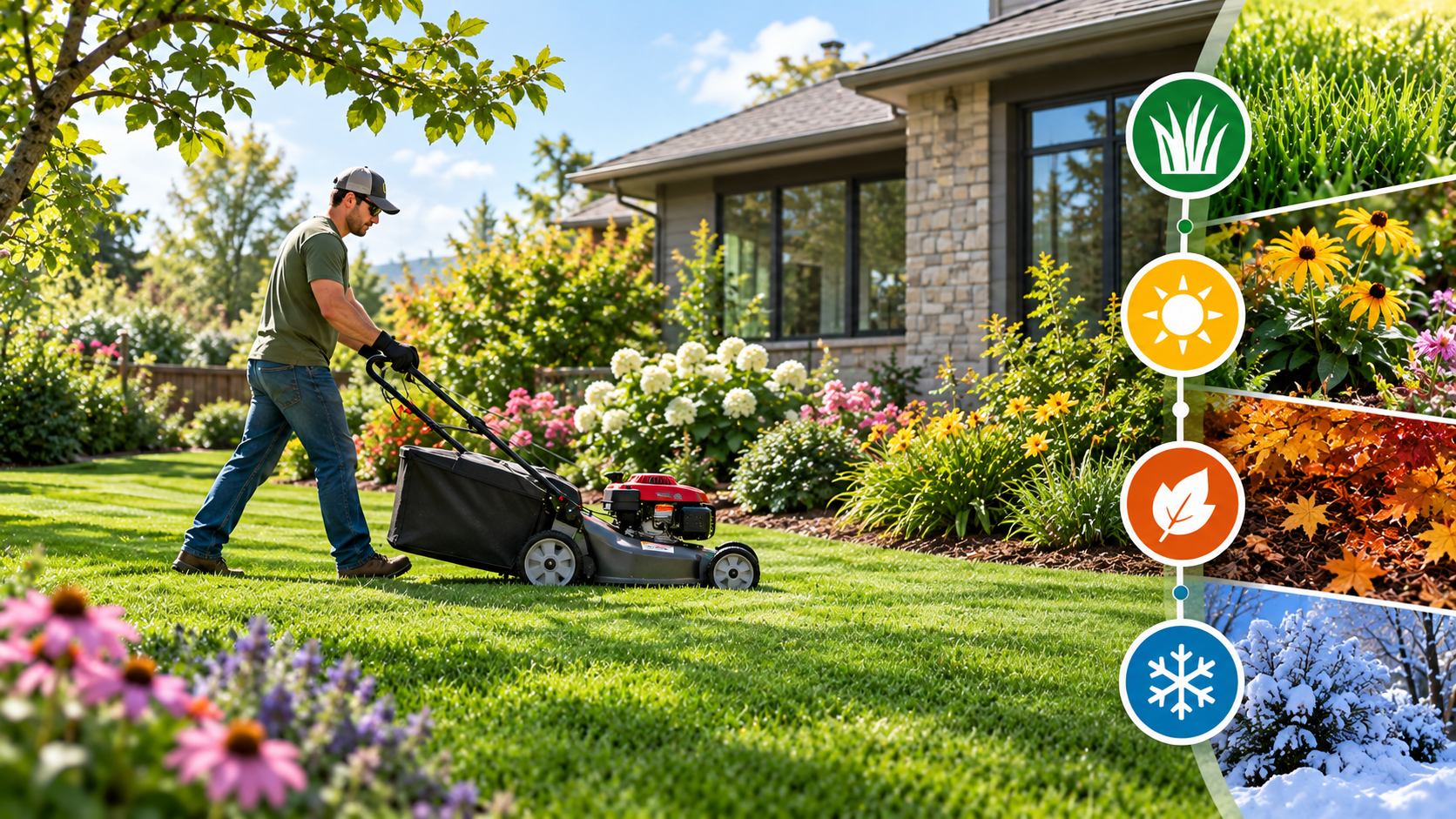
A thick lawn can make it harder for some weeds to establish. Mow at a height suitable for your grass type, avoid scalping, and address bare areas when conditions are appropriate. Grass cut too short may become stressed and leave more room for weeds. Water based on weather, soil, and grass needs rather than assuming more is always better.
Use Mulch in Landscape Beds
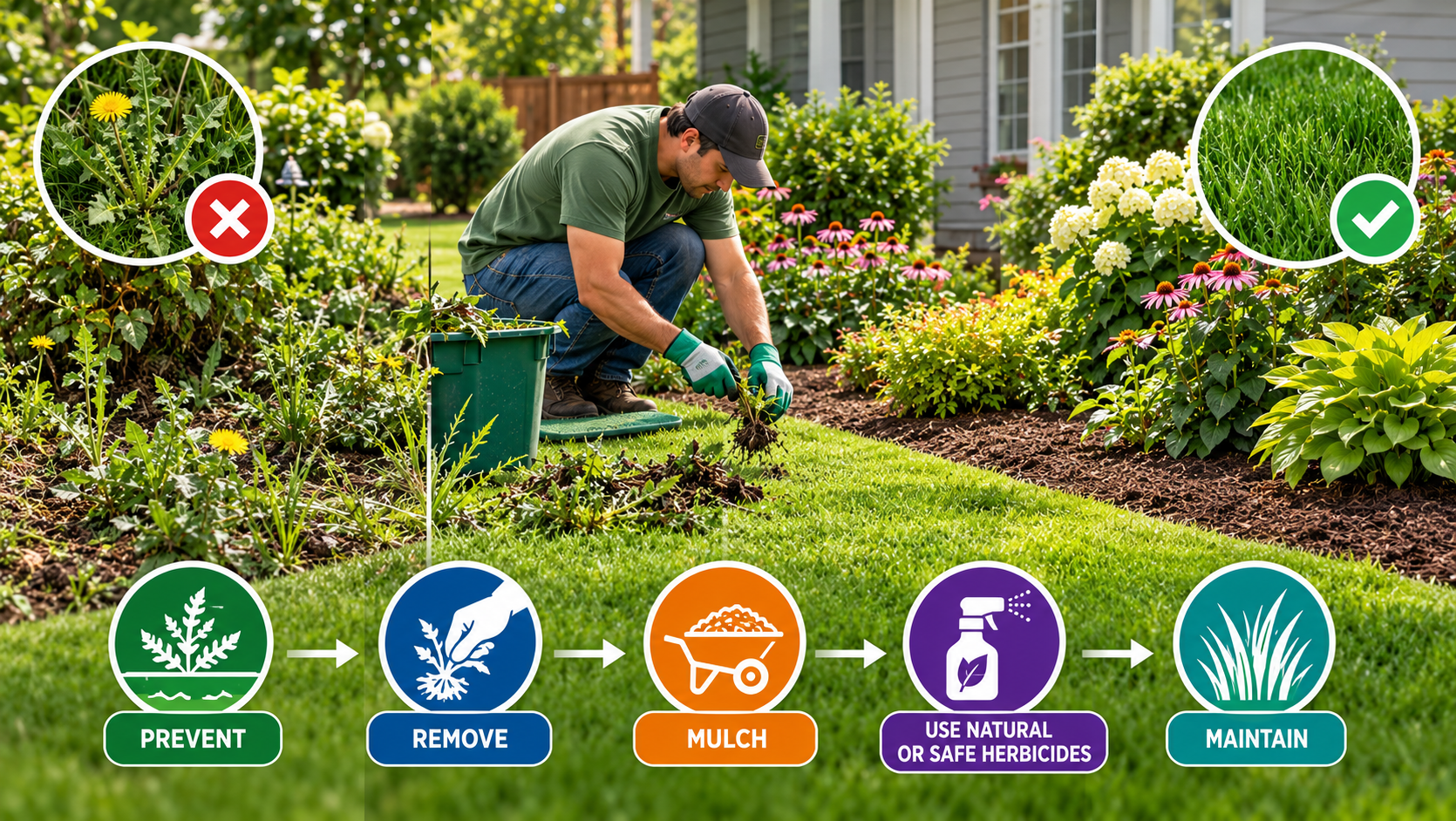
Mulch can reduce the light reaching weed seeds near the soil surface. Remove established weeds before applying it and check the existing layer. Spread mulch evenly and keep it away from trunks, shrub stems, and plant crowns. Excessive mulch can hold too much moisture and cause plant-health issues.
Keep Edges and Walkways Tidy
Weeds often appear along lawn edges, driveway cracks, sidewalks, and garden borders. Regular edging, practical hand removal, and debris cleanup help keep these areas neat. For weeds in hard-surface cracks, choose a method suitable for the location and avoid letting chemicals reach drains, waterways, or desirable plants.
Use Weed-Control Products Carefully
If using a herbicide, follow the product label, including target weeds, application rates, protective equipment, weather conditions, and restrictions around children, pets, desirable plants, and water. Do not mix products unless the label permits it. When uncertain, consult a qualified professional.
Why Weeds Return
Weeds may return because seeds remain in the soil, roots survive, or new seeds arrive from nearby areas. Thin grass, bare soil, poor drainage, compacted areas, and inconsistent mowing can create favorable conditions. Addressing these underlying issues can support longer-term results.
Create a Routine
Inspect lawn and beds regularly, remove small weeds where practical, mow at a suitable height, maintain edges, refresh mulch when needed, repair bare patches when appropriate, and monitor drainage. Choose tasks based on the grass, plants, and actual conditions of your property.