Introduction
Preparing your yard for winter does not require a complete landscaping overhaul. A few well-timed tasks can keep the property tidy and make spring maintenance easier. The right approach depends on grass type, local climate, weather, and property condition. Fall is often a useful time to manage leaves, inspect edges, tidy beds, and address visible drainage concerns.
1. Remove Heavy Leaf Buildup
Thick layers of leaves can block sunlight and trap moisture against grass. Remove heavy accumulations or mulch them finely if the pieces can settle between grass blades without forming a mat. Large amounts may need to be collected instead.
2. Continue Mowing as Needed
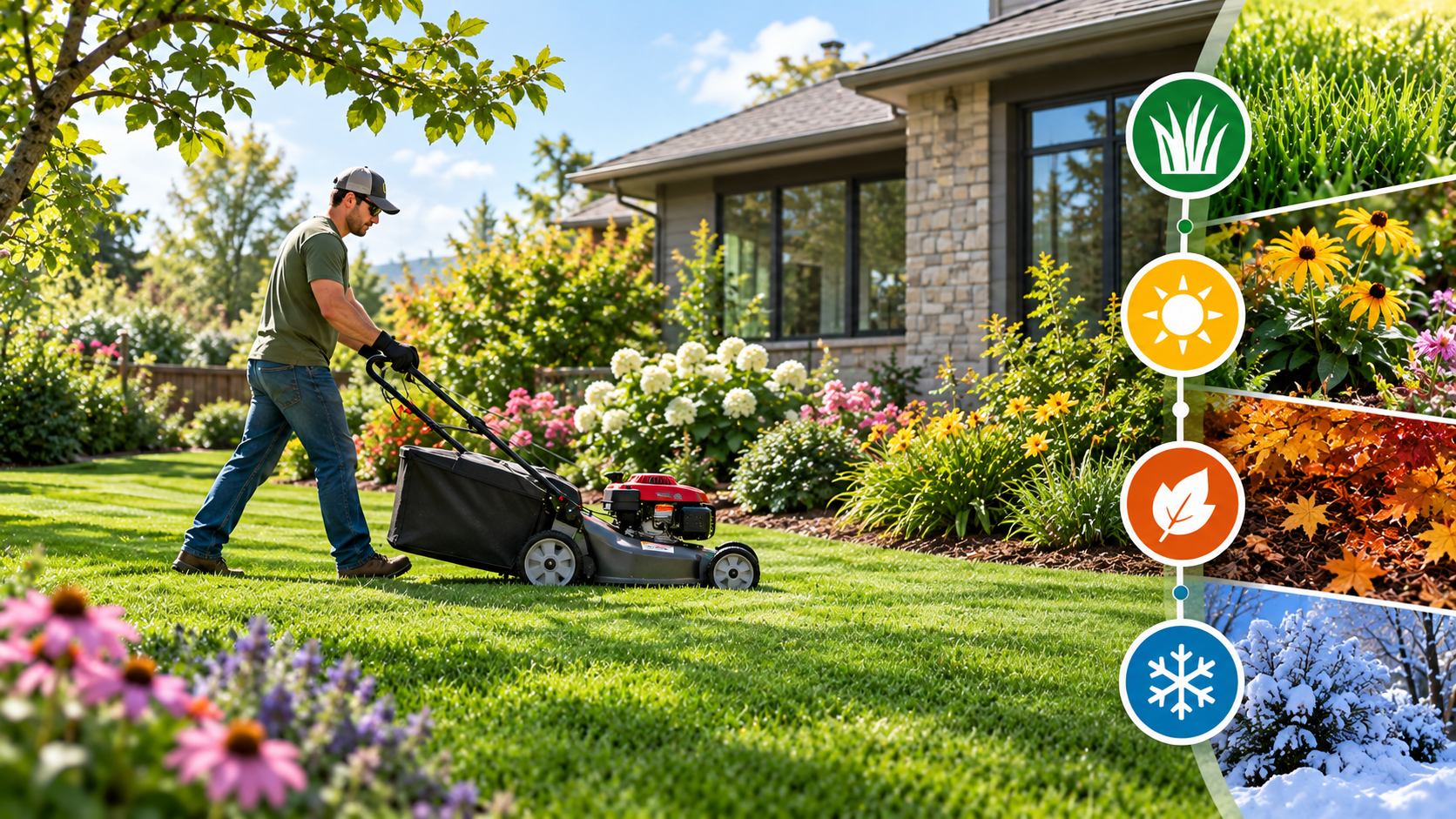
Grass may continue growing into fall depending on temperature and species. Continue mowing while it is actively growing, at an appropriate height. Avoid cutting it extremely short to prepare for winter; scalping can stress grass and expose soil.
3. Tidy Landscape Beds
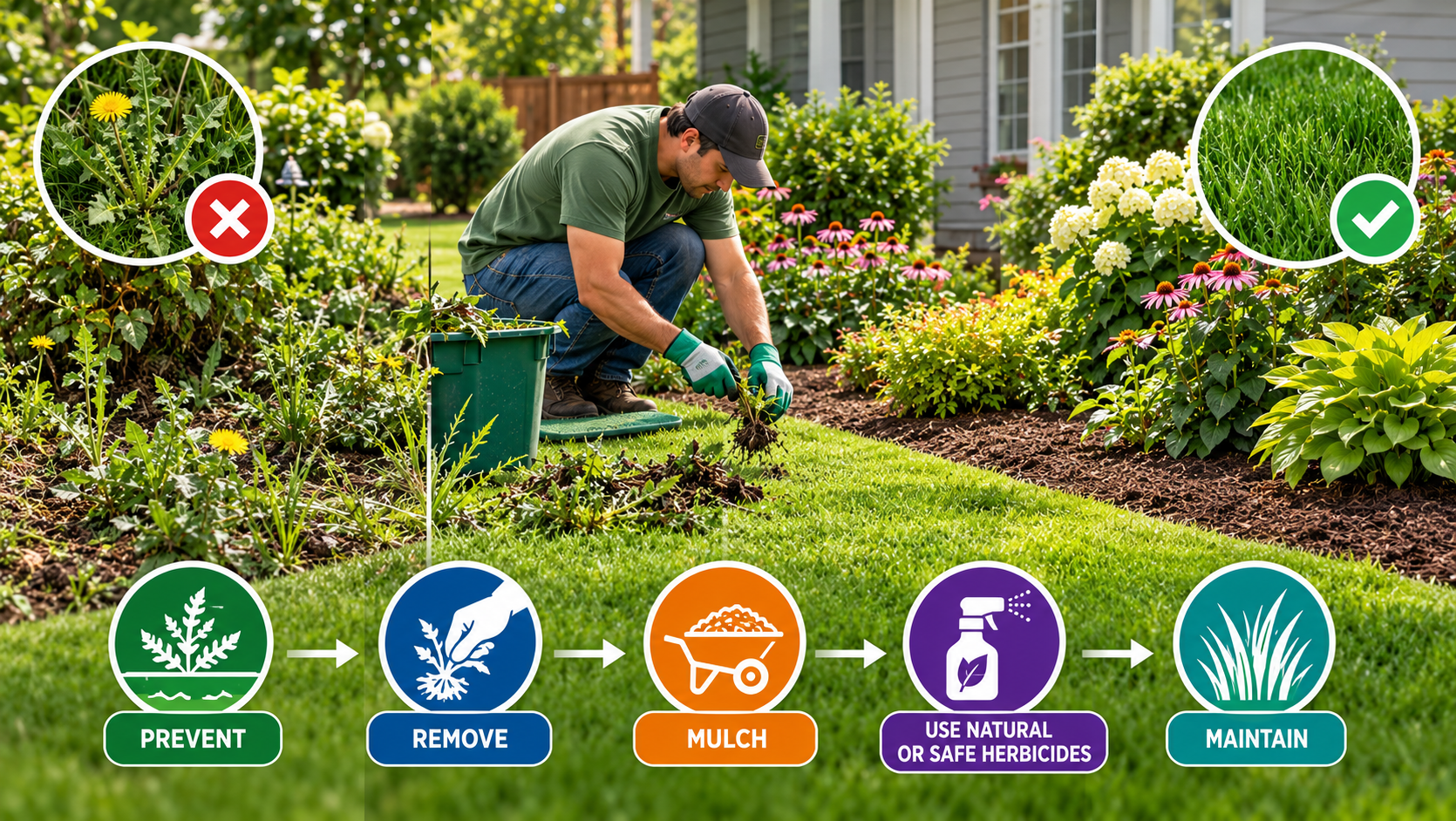
Remove unwanted debris, fallen branches, and weeds where practical. Inspect shrubs and beds for areas needing attention. Do not cut back every plant automatically: some benefit from remaining intact through winter, while others need specific seasonal care.
4. Refresh Mulch Carefully
Mulch can moderate soil temperature and reduce erosion in landscape beds. Check the existing layer before adding more. Apply evenly and avoid piling mulch against trunks, shrub stems, or plant crowns, because excessive mulch can hold moisture and contribute to plant-health problems.
5. Check Drainage and Gutters
Look for areas where water collects or remains trapped in the yard. Keep gutters and downspouts clear enough to move water away as intended. Persistent drainage issues may require professional evaluation, particularly if water repeatedly pools near foundations or walkways.
6. Inspect Walkways and Driveways
Clear leaves and debris from steps, sidewalks, patios, and driveways to help keep the property tidy and reduce slippery conditions. If hard surfaces have significant grime, consider whether pressure washing is suitable for the material and weather. Schedule cleaning only when conditions allow the surface to be cleaned and dried properly.
7. Review Trees, Shrubs, and Fences
Look for visibly damaged branches, loose fence sections, overgrown shrubs, or other issues that need attention. Avoid hazardous tree work or work near power lines; hire a qualified professional for tasks requiring specialized equipment or creating safety risks.
8. Plan Spring Repairs
Note bare lawn patches, recurring weeds, damaged edging, and areas where grass struggles. Seeding and aeration should be timed according to grass type and local growing conditions. Keeping a short list of problem areas helps prioritize work when the growing season returns.